
The
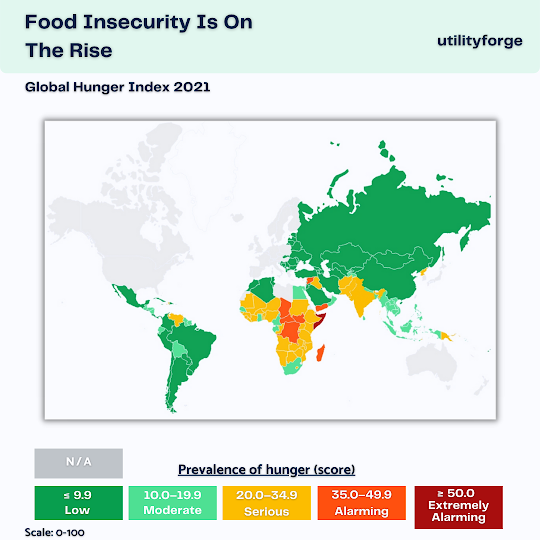
Global Hunger Index (GHI) 2021 tracks the prevalence of hunger in the
world. The index rates "hunger" on 4 elements based on a 100 point
scale:
1. Undernourishment: The share of the population with insufficient caloric intake.
2. Child wasting: The share of children under age five who have low weight for their height, reflecting acute undernutrition.
3. Child stunting: The share of children under age five who have low height for their age, reflecting chronic undernutrition.
4. Child mortality: The mortality rate of children under age five, partly reflecting the fatal mix of inadequate nutrition and unhealthy environments.
The current trends suggest that the world will fail to achieve zero hunger by 2030, and 47 countries, in particular, will fail to achieve low levels of hunger by 2030. Of these countries, 28 are located in Africa, the remaining countries are spread across South Asia, West Asia and North Africa, East and Southeast Asia, and Latin America and the Caribbean.
The pandemic and climate change have made the fight against hunger difficult. The GHI scores show that global hunger has been on the decline since 2000, coinciding with a decline in extreme poverty in that period, but the progress is slowing.
Conflict has also played a major part in food insecurity. Of the 155 million people in acute food crisis in 2020, conflict was the primary driver of hunger for 99.1 million people in 23 countries
1. Undernourishment: The share of the population with insufficient caloric intake.
2. Child wasting: The share of children under age five who have low weight for their height, reflecting acute undernutrition.
3. Child stunting: The share of children under age five who have low height for their age, reflecting chronic undernutrition.
4. Child mortality: The mortality rate of children under age five, partly reflecting the fatal mix of inadequate nutrition and unhealthy environments.
The current trends suggest that the world will fail to achieve zero hunger by 2030, and 47 countries, in particular, will fail to achieve low levels of hunger by 2030. Of these countries, 28 are located in Africa, the remaining countries are spread across South Asia, West Asia and North Africa, East and Southeast Asia, and Latin America and the Caribbean.
The pandemic and climate change have made the fight against hunger difficult. The GHI scores show that global hunger has been on the decline since 2000, coinciding with a decline in extreme poverty in that period, but the progress is slowing.
Conflict has also played a major part in food insecurity. Of the 155 million people in acute food crisis in 2020, conflict was the primary driver of hunger for 99.1 million people in 23 countries


Comments
Post a Comment